
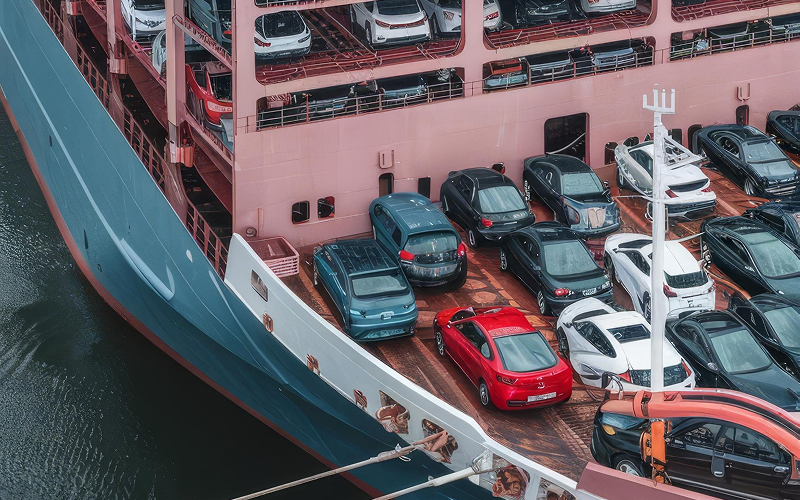
Understanding Car Import Regulations in Singapore: How Parallel Importers Simplify the Process
Why Importing a Car in Singapore Is Different
Importing a vehicle into Singapore involves more than purchasing a car overseas and arranging shipment. Before the vehicle can be registered for road use, buyers must confirm model eligibility, obtain the necessary technical approval, account for import and registration charges, complete inspection requirements, and secure a Certificate of Entitlement (COE).
These steps reflect Singapore’s wider approach to vehicle ownership. The COE system helps regulate the vehicle population, while technical and emissions standards determine whether an imported model is suitable for local roads.
Buyers should therefore understand Singapore’s car import regulations before committing to an overseas purchase. A model that is road-legal in another country may still require supporting certificates, additional testing, or specification changes before it can be approved locally.
Many people looking to buy a new car consider imported vehicles because they may offer different specifications, equipment packages, powertrains, or variants from those available through authorised distributors.
Reviewing car import regulations early helps buyers compare vehicles based on their full registration and ownership costs, rather than focusing only on the overseas purchase price.
Key Takeaways
- Importing a vehicle involves approvals, taxation, inspections, and registration requirements that must be carefully managed.
- Regulatory compliance begins before the vehicle is shipped and continues until registration is completed.
- A parallel importer can manage many of the administrative and logistical stages, although approval and shipping timelines still depend on the relevant authorities and service providers.
Breaking Down Car Import Regulations in Singapore
Understanding car import regulations in Singapore requires a clear view of how vehicle approval, Customs assessment, registration charges, inspections, and COE requirements fit together. Each stage affects whether the vehicle can be registered and what it will ultimately cost.
Key Definitions and Technical Considerations
Several valuation, tax, and registration terms affect the final cost of an imported vehicle. These concepts form an important part of car import regulations in Singapore, as the amount paid to the overseas seller is only one component of the total cost.
Customs Value
Singapore Customs uses the vehicle’s customs value when assessing excise duty and GST. This generally includes the transaction price together with freight, insurance, handling, and other relevant costs associated with bringing the vehicle into Singapore.
For example, if a car is purchased for S$20,000 and shipping and insurance amount to S$2,000, the customs value may be approximately S$22,000, subject to Singapore Customs’ assessment.
Open Market Value (OMV)
Open Market Value is assessed for vehicle taxation and registration purposes. It is used when determining charges such as the Additional Registration Fee. Although Customs value and OMV may draw on related information about the vehicle and its import cost, they are separate technical terms and should not be used interchangeably.
Additional Registration Fee (ARF)
ARF is calculated progressively based on the vehicle’s OMV:
- First S$20,000 of OMV: 100%
- Next S$30,000, from S$20,001 to S$50,000: 140%
- Next S$30,000, from S$50,001 to S$80,000: 180%
- Amount above S$80,000: 220%
For a vehicle with an OMV of S$22,000:
- First S$20,000: S$20,000
- Remaining S$2,000 at 140%: S$2,800
- Total ARF: S$22,800
Because ARF is tiered, different portions of the OMV may be charged at different rates. Buyers should therefore assess the full registration cost rather than relying only on the overseas purchase price.
Excise Duty and GST
Imported motor vehicles are subject to excise duty and GST:
- Excise duty: 20% of customs value
- GST: 9% of the customs value plus excise duty
Using a customs value of S$22,000:
- Excise duty: S$22,000 × 20% = S$4,400
- Amount before GST: S$26,400
- GST: S$26,400 × 9% = S$2,376
These figures illustrate only the import taxes. Other registration and ownership costs still apply.
Vehicular Emissions Scheme (VES)
The Vehicular Emissions Scheme assesses newly registered cars according to their emissions performance. From 1 January 2026 to 31 December 2027, the revised scheme uses the following bands:
- Band A: S$22,500 rebate
- Band B: No rebate or surcharge
- Band C1: S$7,500 surcharge
- Band C2: S$22,500 surcharge
- Band C3: S$35,000 surcharge
Only electric vehicles qualify for the Band A rebate under the revised scheme. Hybrid vehicles that previously fell within Band A2 generally move into the neutral Band B, while vehicles in the former B, C1, and C2 bands move into the revised C1, C2, and C3 bands respectively. The final band is determined by the vehicle’s worst-performing regulated pollutant.
VES rebates are offset against the Additional Registration Fee, while surcharges increase the amount payable at registration. Buyers should therefore confirm the precise emissions classification of the vehicle rather than assuming that a hybrid or cleaner-energy model will automatically qualify for a rebate.
Certificate of Entitlement (COE)
A COE gives the registered owner the right to own and use a vehicle in Singapore for ten years. Imported vehicles are not exempt from this requirement. The applicable COE category and prevailing premium form part of the upfront cost and must be secured before registration can be completed.
Vehicle Approval Requirements
Before an imported vehicle can be registered, its technical specifications and supporting documents must be submitted for assessment. The LTA vehicle approval process generally involves an application submitted through the Vehicle Inspection and Type Approval System (VITAS).
Approval may depend on evidence covering emissions performance, safety standards, vehicle specifications, and original construction. Additional testing or clarification may be required when the available documentation does not sufficiently demonstrate compliance.
This approval stage is highly technical, which is why eligibility should be verified before arranging shipment.
Documentation and Process Requirements
Documentation is a central part of Singapore’s car import regulations because each stage depends on accurate records and timely submissions. A missing certificate, an inconsistent vehicle specification, or an incorrect shipping document can disrupt Customs clearance or delay registration.
Before Purchase or Shipment
The buyer or importer should confirm the exact model, variant, production year, engine specification, and available technical certification. Eligibility questions are best resolved before payment or shipment, when there is still an opportunity to select another vehicle or obtain missing records.
Before Importation
The relevant approval applications and Customs permits must be arranged alongside documents such as the purchase invoice, export certificate, bill of lading, technical records, and emissions certificates. Details across these documents should correspond with the actual vehicle being shipped.
After Arrival
Once the vehicle reaches Singapore, it undergoes clearance, verification, and the required vehicle inspection before registration, which can then be completed once the vehicle meets the applicable requirements and the necessary COE, insurance, road tax, and administrative arrangements are in place.
Understanding the Available Registration Schemes
Not every imported vehicle follows the same registration route. The applicable scheme may depend on the vehicle’s age, intended use, historical status, construction, and technical condition.
Standard registration applies to mainstream passenger cars that satisfy the usual approval, emissions, taxation, inspection, COE, and registration requirements.
Separate classic and vintage vehicle schemes are available for qualifying older vehicles. These schemes have their own age criteria, inspection requirements, usage restrictions, and registration conditions. They should not be confused with the standard route for importing a newer passenger car.
Understanding the approved vehicle schemes is therefore important when navigating car import regulations in Singapore. A vehicle that does not fall within the standard route may potentially qualify under a specialised scheme, but different limitations and requirements may apply.
Buyers should identify the appropriate scheme before purchase, as it can affect the required documents, testing process, ownership costs, and permitted use of the vehicle
Common Restrictions You May Encounter
Many buyers underestimate how restrictive Singapore’s car import regulations can be until they begin researching a specific vehicle.
Right-Hand Drive Requirement
Cars imported through the standard registration route must generally be right-hand drive. This aligns with Singapore’s left-side traffic system. Specialised registration schemes may have different conditions, so buyers should confirm the intended route before assuming that an overseas vehicle is eligible.
Vehicle Age Restrictions
A vehicle’s age may affect its tax treatment and rebate eligibility. In particular, the three-year threshold is relevant to whether an imported used car may qualify for the Preferential Additional Registration Fee rebate, subject to the prevailing conditions.
It should not be described as a universal rule that every car older than three years is automatically ineligible for registration. Qualifying older vehicles may instead fall under separate classic or vintage registration schemes, each with distinct conditions and usage restrictions.
Emissions Compliance
Vehicles must meet local environmental standards, including emissions requirements aligned with national policies. Failure to meet the required standards can affect registration eligibility. Additionally, compliance should be verified against the specific engine and vehicle variant, as models sold under the same commercial name may have different emissions specifications across markets.
Modification Restrictions
Certain modifications that may be acceptable overseas are not necessarily permitted locally. Changes affecting safety, emissions, lighting systems, or structural components may require corrective action before approval can be granted. A modification permitted in the country of origin may still need to be removed or altered before the vehicle can meet Singapore’s requirements.
Model Eligibility
Not every vehicle model qualifies for importation. Some vehicles may require additional certification, technical verification, or supporting documentation before approval can be considered. Eligibility should be checked using the exact model code, engine specification, production year, and available certification rather than relying only on the vehicle’s marketed name.
These restrictions make early verification essential when navigating Singapore’s car import regulations, particularly before payment, shipment, or irreversible modifications are arranged.
Can You Import a Car Yourself?
Individuals may manage their own imports, but handling Singapore’s car import regulations independently requires technical research, administrative coordination, and a willingness to assume the financial risks of approval or documentation problems.
Confirming Eligibility Before Payment
The buyer must confirm that the exact vehicle variant can satisfy local technical and emissions requirements before paying the overseas seller. A familiar model name does not guarantee that every engine, trim, or production-market version is suitable for registration.
Coordinating Multiple Parties
A self-importer may need to manage the overseas seller, freight provider, insurer, declaring agent, inspection centre, workshop, and registration arrangements. Delays can occur when information is not passed accurately between these parties.
Estimating the Full Cost
The buyer must account for the purchase price, shipping, insurance, Customs value, duty, GST, OMV, ARF, VES implications, COE, inspection, registration, and possible rectification work. An incomplete estimate may make the vehicle appear more affordable than it is.
Managing Approval or Inspection Problems
If documents are rejected or the vehicle fails the required checks, the buyer may incur storage fees, additional testing, corrective work, or difficulties in returning the vehicle to the overseas supplier.
How Parallel Importers Simplify Car Import Regulations in Singapore
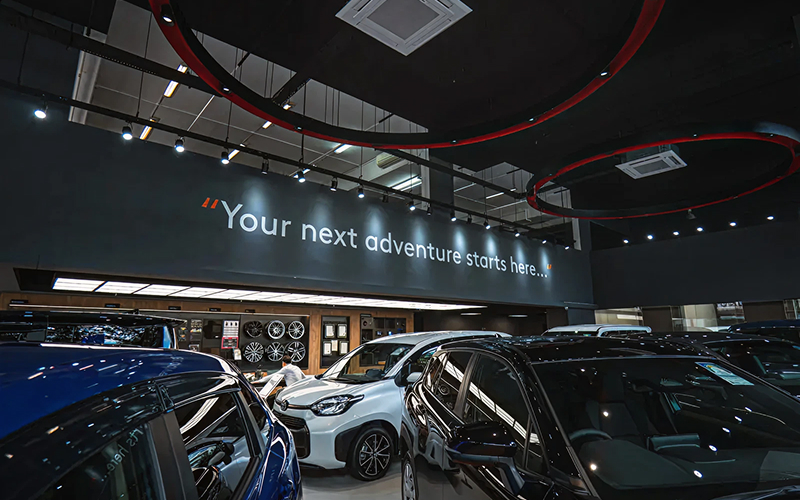
Parallel importers exist because Singapore’s car import regulations involve several connected stages, from overseas sourcing and technical approval to Customs clearance, inspection, and registration.
By coordinating these stages into a single managed process, an importer can reduce the number of parties and submissions the buyer must handle personally. However, government approval, shipping schedules, and inspection outcomes remain subject to the relevant agencies and service providers.
A One-Stop Solution for Compliance
A one-stop process is useful because Singapore’s car import regulations require information to remain consistent across technical documents, purchase records, shipping paperwork, Customs declarations, and registration submissions.
A professional importer typically assists with:
Vehicle Sourcing
Parallel importers assess the exact model, variant, engine specification, production year, and available certification before arranging the purchase. This helps identify whether the vehicle is suitable for the intended registration route and whether additional documentation or testing may be required before it leaves the country of origin.
Pre-Import Approvals
Before shipment, the importer coordinates the relevant technical submissions and supporting records needed for vehicle approval. Resolving document gaps at this stage is preferable to discovering them after arrival, when port storage, additional testing, or inspection rescheduling may add time and expense.
Documentation Management
Importing a vehicle requires extensive documentation, including purchase records, shipping documents, compliance certificates, and customs-related paperwork. Parallel importers manage the preparation and submission of these documents, helping to ensure accuracy and consistency throughout the process. This helps keep vehicle details consistent across Customs clearance, inspection, and registration records.
Logistics Coordination
International vehicle imports involve multiple logistical considerations, from shipping arrangements and insurance coverage to delivery schedules and port clearance procedures. Parallel importers oversee these moving parts on behalf of buyers, coordinating with suppliers, freight providers, and local stakeholders. This coordination helps keep supplier records, shipping details, permits, and arrival arrangements aligned throughout the journey.
Registration and Handover
Once the vehicle arrives, the importer coordinates the remaining inspection and registration stages. This may include compliance verification, COE and registration administration, road tax, insurance arrangements, and vehicle preparation for collection. Handover takes place after the necessary requirements have been completed.
By placing these stages within a coordinated workflow, importers make Singapore’s car import regulations easier for buyers to follow without suggesting that any formal requirement can be skipped.
Where Import Problems Commonly Arise
Problems with Singapore’s car import regulations often arise before the vehicle even reaches the port. Common examples include selecting the wrong vehicle variant, relying on incomplete emissions certification, overlooking overseas modifications, or assuming that the seller’s quoted price represents the full on-road cost.
Other difficulties may involve inconsistencies among the invoice, export certificate, bill of lading, and technical records. Even a small discrepancy in the chassis details, specification, or declared value may require clarification before the process can continue.
A reputable parallel car importer in Singapore can review these issues and identify which matters depend on government approval, third-party inspection, or records from the overseas supplier. This does not eliminate every possible delay, but it gives the buyer a clearer process and fewer administrative tasks to manage personally.
What the Importer Manages and What the Buyer Still Decides
Working with an importer does not mean bypassing car import regulations in Singapore. It means delegating much of the sourcing, documentation, shipping, clearance, inspection coordination, and registration administration to a business familiar with the process.
The buyer still needs to decide:
- Which model and specification meet their needs
- How much they are prepared to spend
- Whether financing is required
- Which insurance arrangement is suitable
- What warranty or servicing support is included
- Which optional equipment or accessories are necessary
Working with a parallel importer in Singapore should give the buyer more clarity, not less control. Before confirming the purchase, the buyer should receive a clear cost breakdown, verify the vehicle specifications, and know what is included in the quoted price.
Choosing a Reliable Parallel Importer
Choosing the right business matters because Singapore’s car import regulations leave limited room for unclear documentation, inaccurate specifications, or incomplete cost estimates.
When evaluating an importer, consider:
- Is the exact model and vehicle specification confirmed in writing?
- Is the quoted price broken down clearly?
- Are warranty and after-sales arrangements explained?
- Does the business provide local servicing support?
- Are regulatory and delivery timelines presented realistically?
- Does the company hold relevant industry accreditations or memberships
A reliable importer should explain the process clearly, provide realistic timelines, and help buyers understand their responsibilities throughout the journey.
Frequently Asked Questions
What rules apply when importing a vehicle into Singapore?
Singapore’s car import regulations cover technical approval, emissions and safety compliance, Customs declarations, excise duty, GST, registration charges, inspection, COE, insurance, and road tax. The precise requirements depend on the vehicle’s age, engine specification, production market, supporting documents, and the registration scheme under which it is assessed.
Can I import any vehicle model into Singapore?
No. Eligibility depends on the exact vehicle variant, production year, engine specification, emissions records, safety compliance, and intended registration route. A model that is legally sold overseas is not automatically eligible for local sale. Buyers should verify the technical documents and approval requirements before making payment or arranging shipment.
How long does the import process usually take?
There is no fixed timeline because approval, shipping, Customs clearance, inspection, and registration schedules can vary. The process may take several weeks or longer. Incomplete documents, additional testing, shipment disruptions, or inspection concerns may extend the timeline, even when an importer coordinates the administrative stages.
Is importing a vehicle always cheaper?
Not necessarily. Buyers must compare the full cost, including the overseas price, shipping, insurance, duty, GST, ARF, VES implications, COE, inspection, registration, and any corrective work. Imported vehicles may still appeal because of their specifications, equipment, or model availability rather than because they are always cheaper.
Why use a parallel importer instead of handling the process yourself?
A parallel importer is familiar with car import regulations in Singapore and can coordinate sourcing, approval documents, shipping, Customs clearance, inspections, and registration. This reduces the administrative burden on the buyer, although approval decisions and certain timelines remain outside the importer’s direct control.
Structuring a Smarter Car Import with Venture Cars
At Venture Cars, we help buyers navigate Singapore’s car import regulations by coordinating the vehicle selection, documentation, approval, registration, and handover stages within a clearer process.
Our role extends beyond sourcing a vehicle. Buyers can receive guidance on model selection, cost considerations, financing options, warranty coverage, and after-sales support. Venture Cars also provides continued ownership support through workshop and servicing arrangements, giving customers a local point of contact after the vehicle has been delivered.
Visiting our car showroom in Singapore allows you to view available models, compare specifications, and discuss the expected cost structure with our team before making a decision.
By bringing sourcing, compliance coordination, financing support, and after-sales assistance together, we make local car import regulations easier to understand throughout the buying journey.
Please contact us today to compare suitable imported models and receive a clearer breakdown of the approval, registration, and ownership considerations involved.
