
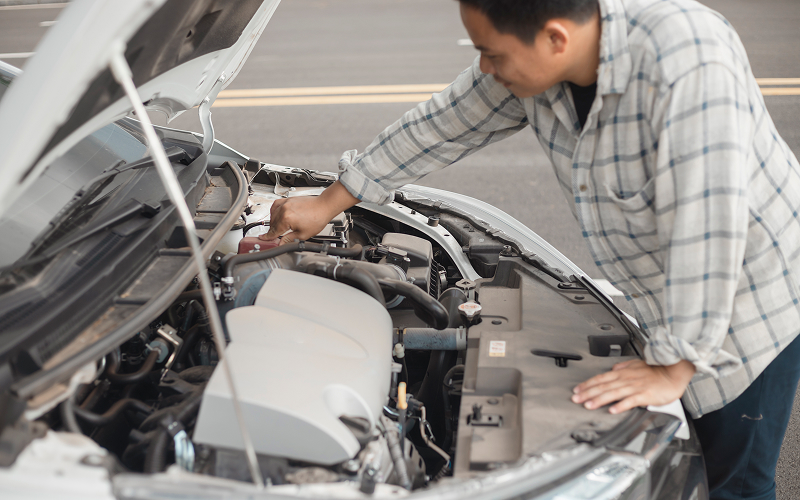
Car Daily Maintenance: Preventing Common Breakdown Issues in Singapore
Key Takeaways
- Daily car maintenance helps Singapore drivers catch small issues before they escalate into costly breakdowns.
- Common breakdowns often stem from battery wear, overheating, tyre damage, and brake deterioration.
- A simple daily car inspection checklist can significantly reduce roadside incidents and safety risks.
- Ignoring minor warning signs increases inspection failure risk during mandatory vehicle inspections.
- Preventive care supports long-term reliability and ensures smoother ownership when you buy a new car in Singapore.
Introduction
In many cases, car breakdowns in Singapore stem from small issues that go unnoticed in daily driving. Tropical heat, heavy rain, stop-start traffic and expressway commuting along routes like the PIE and CTE all place steady stress on key components.
These are easily avoidable by routinely carrying out daily upkeep on your car performance.
Car daily maintenance does not require technical expertise. It simply calls for consistent awareness of the state of your car.
Simple preventive checks can significantly reduce the risk of overheating, battery failure, brake issues and tyre-related incidents.
These habits are almost always more manageable than relying on a towing service during emergencies.
More importantly, neglecting these small issues can gradually build into larger faults that eventually increase your risk of inspection failure during mandatory vehicle checks.
Common Breakdown Issues on Singapore Roads
Before diving into prevention, it helps to understand what typically causes breakdowns locally.
In Singapore’s driving environment, breakdowns are often linked to:
- Battery failure due to heat and short trips
- Engine overheating in heavy traffic conditions
- Tyre punctures or blowouts during wet weather
- Brake wear from constant stop-start driving
- Electrical or air-conditioning system strain
These issues develop progressively, which makes daily car maintenance one of the simplest and most effective ways to prevent disruptions.
Dead Car Battery from Heat and Short Trips
Singapore’s warm climate accelerates battery wear. Frequent short-distance driving, especially within estates, may not allow the battery to fully recharge.
Warning Signs
- Slow engine cranking
- Dim headlights
- Dashboard battery warning light
Prevention Approach
- Start the engine smoothly without repeated ignition attempts
- Avoid leaving lights or accessories on when the engine is off
- Monitor battery age and replace proactively before failure
Battery-related breakdowns remain one of the most common roadside incidents in Singapore, often requiring urgent assistance.
Engine Overheating in Heavy Traffic
Stop-and-go traffic along major expressways places strain on the cooling system. Low coolant levels or radiator issues may lead to overheating.
Warning Signs
- Temperature gauge rising unusually high
- Steam from the bonnet
- Coolant warning indicator
Prevention Approach
- Check coolant levels regularly
- Observe the temperature gauge during longer drives
- Address leaks early instead of repeatedly topping up
Overheating can cause severe engine damage if left unattended, especially during peak-hour congestion.
Worn Tyres and Sudden Punctures
Tyres endure high friction in urban traffic and wet road conditions. Worn tread reduces grip and increases blowout risk, particularly during highway driving.
Warning Signs
- Uneven tyre wear
- Vibration at higher speeds
- Low tyre pressure indicator
Prevention Approach
- Check tyre pressure consistently
- Inspect tread depth visually
- Replace tyres before they reach minimum limits
Tyre issues are a common cause of breakdowns and are often preventable with routine checks.
Brake Wear from Urban Driving
Frequent braking in dense traffic accelerates pad and disc wear. Over time, this affects stopping performance and safety.
Warning Signs
- Squealing or grinding noise
- Soft brake pedal feel
- Longer stopping distance
Prevention Approach
- Listen for unusual sounds
- Avoid aggressive braking habits
- Service brakes at recommended intervals
Brake wear develops gradually, making early detection through daily car maintenance especially important.
Air-Conditioning and Electrical System Strain
Singapore’s climate makes air-conditioning essential. Continuous usage places strain on compressors and electrical systems.
Warning Signs
- Weak cooling performance
- Unusual smells
- Flickering interior lights
Prevention Approach
- Run the system regularly to maintain efficiency
- Avoid overloading electrical accessories by keeping your vehicle’s electrical demand within what the system is designed to handle.
- Address minor cooling issues early
Electrical faults often begin as small irregularities before escalating into larger system failures.
Daily Car Inspection Checklist for Singapore Drivers
A structured daily inspection checklist can help drivers stay consistent without adding complexity to their routine.
Before Driving
- Check for dashboard warning lights
- Observe tyre condition and pressure visually
- Ensure headlights and brake lights are functioning
- Confirm no visible fluid leaks beneath the vehicle
Weekly Quick Checks
- Check engine oil level
- Check coolant level
- Inspect the brake fluid reservoir
- Test battery condition if nearing replacement age
During Driving
- Monitor engine temperature gauge
- Listen for unusual noises
- Pay attention to vibration or steering pull
Car Daily Maintenance Checklist (Singapore Drivers)
Use this quick checklist before driving or at least a few times a week. Most checks take under 5 minutes.
1. Tyres and Wheels
☐ Check tyre pressure (refer to door panel sticker; typically 30–35 PSI for most passenger cars)
☐ Ensure tyres are not visibly underinflated or bulging
☐ Inspect tread depth (At least or more than: 1.6 mm)
☐ Look for uneven wear, cracks, or embedded objects
2. Lights and Signals
☐ Headlights (low and high beam) are working
☐ Brake lights activate when pressed
☐ Turn signals blink consistently
☐ Reverse lights and hazard lights function properly
3. Dashboard and Warning Indicators
☐ No active warning lights (engine, battery, oil, brake)
☐ Fuel level sufficient for planned trip
☐ Temperature gauge stays within normal range
4. Fluid Levels (Check Weekly or Every Few Drives)
☐ Engine oil level within dipstick range (between MIN and MAX)
☐ Coolant level between LOW and FULL markings
☐ Brake fluid above minimum level
☐ Windscreen washer fluid topped up
5. Battery and Electrical System
☐ Engine starts smoothly within 1–2 seconds
☐ No dimming headlights during start-up
☐ No flickering interior lights while driving
6. Brakes and Driving Feel
☐ Brake pedal feels firm (not spongy or sinking)
☐ No squealing, grinding, or unusual sounds
☐ Vehicle stops within normal distance
7. Under Vehicle Check (Quick Visual)
☐ No visible fluid leaks under the car
☐ No strong fuel, burnt, or chemical smells
8. Air-Conditioning and Cabin
☐ Air-conditioning cools within 1–2 minutes
☐ No unusual odours from vents
☐ Airflow is consistent
9. During Driving Awareness
☐ No unusual vibrations at 50–90 km/h
☐ Steering remains straight without pulling
☐ No knocking, rattling, or sudden changes in sound
When to Take Action Immediately
- Tyre tread below 1.6 mm
- Engine temperature rising above normal
- Warning lights remain on after start-up
- Burning smells or visible smoke
- Brakes feel weak or unresponsive
Tip for Singapore Drivers
Given frequent rain and expressway speeds, aim to replace tyres before reaching 1.6 mm to safely keep within the legal limits, ideally around 2.5–3.0 mm for safer wet-road grip.
This checklist is intended as a general guideline for routine vehicle checks and does not constitute the professional advice or assessment of a qualified mechanic. For accurate diagnosis, servicing, or safety concerns, always consult a certified automotive professional.
How Daily Maintenance Reduces Inspection Risks
In Singapore, vehicles must undergo periodic inspections to ensure roadworthiness. Many failures are not due to major defects but the accumulation of neglected minor issues.
For example:
- Worn tyres may fail the tread depth requirements
- Brake wear may not meet safety standards
- Fluid leaks or warning lights may trigger immediate rejection
Daily car maintenance helps prevent these scenarios by catching and addressing issues early. Over time, this reduces the chance of inspection failure and avoids the inconvenience of repeat inspections.
Supporting Smarter Ownership Decisions
Preventive maintenance also plays a role when evaluating long-term ownership decisions. Drivers exploring options through a parallel car importer in Singapore often prioritise reliability and maintenance history when selecting vehicles.
Similarly, visiting a car showroom in Singapore allows buyers to compare models based on durability, servicing needs, and suitability for local driving conditions.
Understanding how maintenance impacts performance and lifespan helps drivers make more informed decisions before committing to ownership.
Build Better Habits, Drive with Confidence
Car breakdowns are rarely sudden events. They are usually the result of small issues that have been overlooked over time. With consistent car daily maintenance, drivers can identify early warning signs, reduce safety risks, and avoid unnecessary disruptions.
At Venture Cars, we recognise that owning a vehicle in Singapore involves more than just the initial purchase. It requires a practical approach to long-term reliability, maintenance planning, and everyday usability.
Whether you are planning to upgrade your vehicle or looking to buy a new car, our team can guide you towards options that align with real-world driving conditions and sustainable ownership.
Contact us today to explore solutions designed for confident, hassle-free driving in Singapore.
