
How Much Does It Cost to Buy a Car in Singapore?
Singapore is known for its high cost of living, and purchasing a car is no exception. With staggeringly high upfront costs involved, the total cost of car ownership is a significant financial investment here. It’s easy for first-time car owners to get overwhelmed by all the various fees, but understanding how they all work together can help them plan their budget more effectively.
In this article, we’ll take a closer look at the car costs in Singapore, exploring everything from the Certificate of Entitlement (COE) to ongoing expenses and resale value. We’ll also provide some practical tips to help manage these costs in the long run.
Breakdown of Car Costs in Singapore
Demystifying the COE
One of the key costs to consider when buying a car in Singapore is the COE. This license grants you the right to own a car for 10 years and is often a major contributor to the high cost of car ownership in the country.
What Is It For?
The COE system is primarily in place to control the number of cars on the road and limit congestion. By making car ownership more expensive, the government aims to reduce traffic and encourage the use of public transportation. This helps to ensure that the city remains livable and that resources like roads and parking spaces are not overburdened.
How Does it Work?
The COE is categorised into different groups based on factors such as engine size and power output. For example, Category A includes smaller cars with engines up to 1,600cc or a maximum power output of 97kW, while Category B is for larger vehicles with more powerful engines.
COE prices are determined by open bidding exercises on the 1st and 3rd Mondays of each month. Here is how the process usually works

Taxes, Registration Fees, and Other Charges

Car buyers will also need to consider the various taxes and fees involved in your overall car costs.
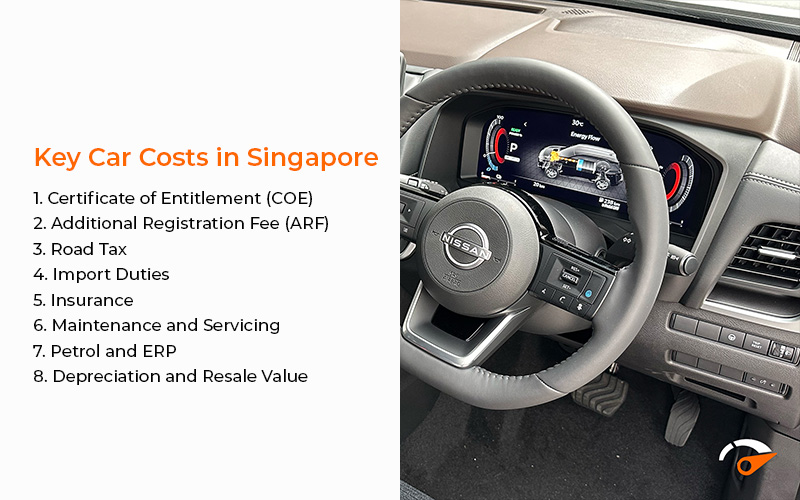
1. Additional Registration Fee (ARF)
The ARF is a tax calculated based on the Open Market Value (OMV) of your car, which is essentially the cost of a vehicle imported into Singapore. This value is assessed by Singapore Customs, taking into account factors such as purchase price, freight, insurance, and more.
Additionally, the ARF is tiered, with higher OMVs being taxed at progressively higher rates. For instance, cars with an OMV above $80,000 can face an ARF rate of up to 250% of the OMV. This means the more expensive the car, the more significant this tax becomes, potentially adding tens of thousands of dollars to the final car cost in Singapore.
2. Road Tax
Road tax is another key consideration, calculated based on your car’s engine capacity. Cars with larger engine capacities—such as those above 3,000cc—incur a road tax rate of $1,000 annually. Conversely, cars with smaller engines or hybrid/electric vehicles may have lower road tax obligations, making them a more economical choice. Keep in mind that road tax is an ongoing cost that must be renewed every six or twelve months. Failing to do so will require you to pay a late fee penalty of up to $270.
3. Import Duties and Other Government Fees
If you’re purchasing an imported vehicle, there are additional costs to consider, such as import duties, Goods and Services Tax (GST), and compliance fees. These charges ensure the car meets Singapore’s strict regulatory and safety standards before it can be registered for use.
Parallel car importers in Singapore usually manage these car costs on behalf of the buyer, but it’s always a good idea to confirm the breakdown of fees to avoid surprises. This transparency ensures you’re fully aware of any extra charges and how they affect the total cost of ownership.
Ongoing Car Costs to Consider
Apart from the COE and various vehicle taxes, there are also ongoing car costs to consider, These include insurance, maintenance, and the potential resale value.
1. Insurance
Car insurance premiums are influenced by several factors, including the car model, your driving experience, and the level of coverage you opt for. In Singapore, there are three types of coverage: third-party, third-party fire and theft, and comprehensive. Younger or less experienced drivers may face higher premiums due to perceived risk, while those with a clean driving record may benefit from a No Claims Discount (NCD). This incentive rewards drivers who go a year or more without making claims under their policy, helping to reduce the overall cost of car insurance.
2. Maintenance and Servicing

Routine servicing is essential to keep your car running smoothly and to prevent costly repairs in the long run. Maintenance costs can vary widely based on the car’s make and model, with luxury or high-performance vehicles typically incurring higher expenses. It’s also important to note that car maintenance expenses can vary depending on the workshops you visit. For example, authorised service centres from established car brands often charge more than independent ones.
3. Petrol and ERP
Petrol costs can vary depending on your car’s fuel efficiency and the current price of fuel. As of January 2025, the average cost of petrol in Singapore is $2.78 per litre, with prices differing based on the fuel brand and grade. Additionally, individuals who drive more frequently or cover longer distances will naturally incur higher fuel costs.
In addition, drivers must factor in Electronic Road Pricing (ERP) charges, which are toll fees designed to manage traffic congestion during peak hours. Rates change depending on the time of day, location, and traffic conditions, with some hotspots like the Central Business District (CBD) incurring higher charges.
4. Depreciation and Resale Value
Not many drivers consider this, but depreciation is actually a major cost of car ownership. Vehicles in Singapore typically lose value rapidly due to high initial costs and limited COE validity (10 years). You will also need to factor in the Preferential Additional Registration Fee (PARF), which applies to cars that are deregistered before reaching 10 years of age. This allows owners to recover a portion of the initial ARF paid.
How to Manage Car Costs Over Time in Singapore
Now that we’ve broken down the major car costs in Singapore, it’s time to look at how you can manage these expenses effectively over the course of your car ownership. In this section, we’ll cover practical tips to reduce car ownership costs and maximise your car’s resale value, helping you get the most out of your investment.
Ways to Cut Costs When Owning a Car
1. Choose a Fuel-Efficient Car

Fuel costs can quickly add up in Singapore, especially if your car isn’t very fuel-efficient. To reduce this ongoing expense, consider purchasing a hybrid or electric vehicle (EV). These vehicles offer better mileage and lower running costs due to their reduced fuel consumption, which can translate into significant savings over time. The Nissan Serena, for example, is a popular choice for families that offers good fuel efficiency compared to petrol vehicles, further reducing car costs.
2. Drive Efficiently
Your driving habits have a direct impact on both fuel consumption and the overall maintenance costs of your car in Singapore. Simple practices like avoiding rapid acceleration, maintaining a steady speed, and driving smoothly can significantly improve fuel efficiency. Additionally, keeping your tyres properly inflated and performing regular engine checks will reduce wear and tear, leading to fewer repair needs and a longer vehicle lifespan.
3. Consider Parallel Imports
Parallel-imported vehicles often come with lower upfront costs compared to those bought through authorised dealers. They work by sourcing cars directly from overseas markets, cutting out the middlemen, and passing on the savings to you. For instance, a Toyota parallel import can offer a more affordable alternative to a new Toyota from an authorised dealer. Although you may forgo the dealership’s warranty, the cost savings on the purchase price and flexibility in vehicle choice can be worthwhile, especially when considering long-term ownership.
4. Time Your Purchase
COE prices can fluctuate based on market demand and bidding trends. If you closely monitor the COE bidding process and choose to purchase your car when prices are lower, you can significantly reduce the overall cost of ownership. Typically, COE prices tend to dip during quieter periods or when there’s less demand, so timing your purchase wisely can help you enjoy significant savings for the cost of your car in Singapore.
How to Maximise Your Car’s Resale Value
If you plan to sell your car in the future, it’s important to choose a model that will hold its value well.
1. Pick a Car Model with a Strong Resale Value
Some cars are better at holding their value over time than others. Cars from certain brands, such as Toyota and Honda, are known for their relatively slower depreciation rates. Models like the Honda Stepwagon are in high demand due to their reliability and practicality, which helps them retain value better than less sought-after models. When selecting a car, consider not only your current needs but also how it will fare on the resale market in the future; this can help you make a more financially sound investment.
2. Avoid Excessive Modifications
While custom modifications may seem like a way to personalise your car, they might hurt its resale value. Many buyers prefer stock, unmodified cars because they are seen as more reliable and easier to maintain. Additionally, modifications can make a car more niche and less appealing to a broader audience. If you want to maintain your car’s resale value, it’s best to avoid excessive customisations or, at the very least, ensure that any modifications are easily reversible.
3. Keep Your Car Well-Maintained

Regular servicing and prompt repairs are essential to keeping your car in good condition and preserving its value. A car that has been well-maintained, with up-to-date servicing records, is much more appealing to potential buyers. Routine maintenance, such as oil changes, tyre rotations, and brake checks, will not only keep your car running smoothly but also demonstrate to future buyers that the car has been cared for. Keeping both the interior and exterior in pristine condition can make a big difference in the final resale price.
Frequently Asked Questions
1. Are parallel imports from Venture Cars covered by warranties?
Yes, all vehicles purchased from Venture Cars come with warranty packages designed to provide peace of mind. Our cars are backed by up to a 10-year/200,000 km engine warranty and up to a 5-year/130,000 km warranty, whichever comes first. Additionally, car accessories are covered by a 1-year warranty, ensuring comprehensive protection for your purchase.
2. How does Venture Cars ensure the quality of its parallel-import cars?
At Venture Cars, we prioritise quality and transparency. Every vehicle undergoes the mandatory VITAS (Vehicle Inspection & Type Approval System), ensuring it meets all technical and regulatory requirements for safe and compliant use on Singapore’s roads.
3. Are there any additional fees when buying a car from Venture Cars?
At Venture Cars, we are committed to transparent pricing. While parallel-import cars often have lower upfront costs, certain additional fees may apply, such as registration, COE (Certificate of Entitlement), and compliance with Singapore’s regulations. We ensure that all potential charges are clearly explained upfront, so there are no surprises along the way.
Conclusion
While the overall cost of owning a car in Singapore can seem intimidating, it’s not just about the upfront investment. By taking COE, taxes, and maintenance into account in your financial planning, you can make a more informed decision and ensure your purchase remains worthwhile in the long run.
Whether you’re eyeing a high-performance car or a practical, family-friendly option, Venture Cars offers a variety of quality vehicles at competitive prices. As a trusted parallel car importer in Singapore, we provide a diverse selection of cars from trusted brands like Toyota, Honda, and Nissan. Let us help you get the best value for your money.
Contact us today to find out more.
